Building the Circle: Practicing Contributionism in Modern Communities

From Blueprint to Practice
The first part of this series explored Jesus’s life as a living model of Contributionism — a regenerative pattern of shared abundance and mutual uplift. Part 2 moves from inspiration to implementation, showing how that ancient blueprint can be lived out in modern communities.
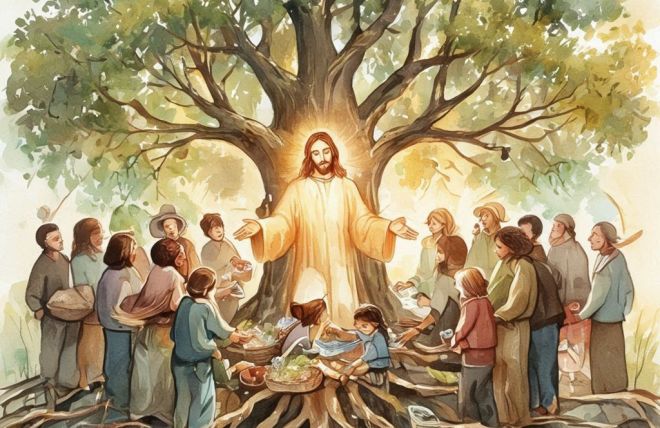
Contributionism begins with a simple truth: thriving is collective. Every regenerative system — soil, water, energy, people — grows stronger when the flow of resources and care circulates freely. The circle Jesus built wasn’t symbolic; it was practical. Food was shared, skills were exchanged, healing was offered freely, and no one was left outside the firelight.
Practicing Regeneration Today
Modern communities are rediscovering this pattern through local action:
-
Energy Circles: Neighborhood solar and wind cooperatives that share power and maintenance.
-
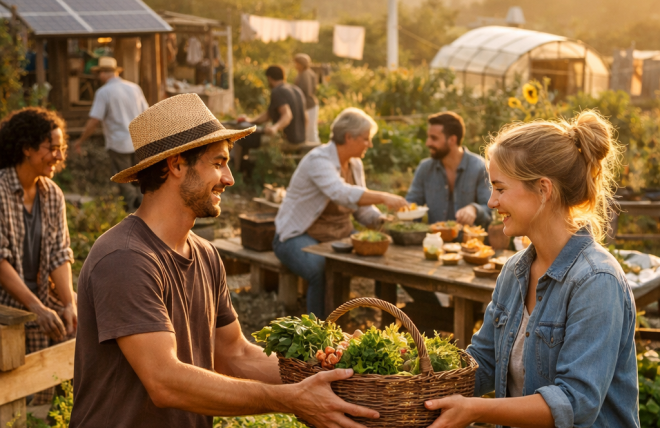
Food Networks: Community gardens and seed circles that feed families and restore soil health.
-
Skill Exchanges: Workshops where people trade knowledge — carpentry for coding, cooking for composting.
-
Shared Tools: Libraries of things that reduce waste and strengthen connection.
Each of these practices embodies the same regenerative logic: abundance grows when it circulates.
The Shift from Idea to Action
Contributionism isn’t charity or sacrifice. It’s a recognition that my thriving is tied to yours. It asks us to belong differently — to see community not as a backup plan, but as the primary engine of resilience.
UnpluggedSpirit’s work continues this lineage by weaving together spiritual insight and practical design. Through regenerative infrastructure, shared resources, and local collaboration, we’re rebuilding the circle — one neighborhood, one garden, one workshop at a time.
Expanding the Circle: Additional Practices of Contributionism
To deepen the practice of Contributionism in modern communities, consider these additional approaches that foster connection, resilience, and shared abundance:
-
Time Banking: A system where community members exchange hours of service instead of money, valuing everyone's contributions equally.
-
Community Currencies: Local currencies that encourage spending within the community, strengthening local economies and relationships.
-
Repair Cafés: Gatherings where people bring broken items to be fixed collaboratively, reducing waste and building skills.
-
Co-housing and Shared Living Spaces: Intentional communities designed to share resources, responsibilities, and social support.
-
Participatory Decision-Making: Inclusive governance models that ensure all voices are heard and contribute to community direction.
These practices extend the regenerative flow beyond material resources to time, skills, governance, and social capital, enriching the circle and making it more resilient.
Stories of Impact
Across the globe, communities practicing Contributionism are seeing tangible benefits:
-
In a small town, a time bank helped neighbors support elderly residents with errands and companionship, reducing isolation.
-
A community currency in a city neighborhood boosted local business revenues and strengthened social ties.
-
Repair cafés have diverted tons of waste from landfills while empowering people with new skills.
-
Co-housing projects have created affordable, supportive living environments that nurture intergenerational bonds.
These stories illustrate how Contributionism is not just theory but a living, evolving practice that transforms lives and places.
Invitation to Participate
Contributionism invites each of us to step into a role of active participation. Whether through sharing skills, resources, time, or decision-making, every contribution matters.
The circle grows stronger with each new member, each new act of generosity, and each new connection.
Together, we can build communities that thrive not in spite of challenges but because of our shared commitment to regeneration and mutual care.
Join the circle. Belong differently. Thrive collectively.
Living the Blueprint
To practice Contributionism is to remember that connection is the first technology. It’s to rebuild systems that honor reciprocity, care, and creativity. It’s to turn inspiration into implementation.
The circle is open. The invitation is simple: belong differently.
Read Part 1: Jesus and the Roots of Contributionism: A Forgotten Blueprint for Regenerative Community
#RegenerativeCommunities #RegenerateTogether #CommunityResilience #SoilToSoul #LocalEconomy #SeedCircle #CommunityGarden #SharedResources #Permaculture #NeighborhoodAction #UnpluggedSpirit #UbuntuLiving #IAmBecauseWeAre #WhereWeGrowOneWeGrowAll #WeThriveTogether